Every October, I make it a tradition to watch or binge certain media. The Blair Witch Project and The Others are “must watch” movies. I might break out a Stephen King book, I’ll try to spend an evening laughing through The House on Haunted Hill. And I usually put some time aside to binge Bravo’s 100 Scariest Movie Moments.
It admittedly gets stale the more films on the list I see, but it gives me a sense of nostalgia. Plus, it reminds me of films I still need to see and film history I want to know more about.
Horror is a genre that uniquely requires ambassadors to convince people to give it a try. “Why would I want to do something unpleasant like get scared or grossed out?” Bravo’s 100 Scariest Movie Moments brings forth dozens of very enthusiastic ambassadors to make horror seem more approachable. Your Intrepid Host wasn’t always a passionate horror fan! One of the ways I got here was through this 3¾ hours miniseries.
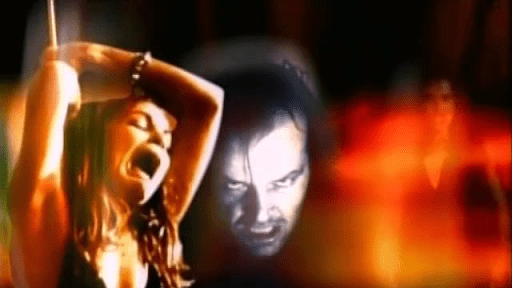
Bravo’s 100 Scariest Movie Moments premiered in 2004 as a 5-part miniseries. It was very much a part of the early 2000’s cheap production movement of “meh, let’s just grab some ‘personalities’ and do a multi-hour clip show.” But the difference with this clip show was that actual effort was put into it. You could actually walk away from it having learned some things about horror film history and perhaps with a list of movies you want to check out.
The 100 films were selected very thoughtfully, and with knowledge of horror film history and its influence on popular culture. Viewers can get exposed to a lot of entertaining and substantive information about 40 years of horror films.
Awesomely, viewers get that info from the mouths of great horror creators. George Romero, John Carpenter, Wes Craven, Tobe Hooper, Guillermo del Toro, Eli Roth, Rob Zombie, John Landis, Rob Reiner, Dario Argento, Peter Jackson (remember, he started in horror!), and Mary Lambert all stop by to talk about their creations as well as the horror films they enjoy the most. Hell, even Martin Scorsese stops by for 5 seconds.
We hear from Tom Savini, who is a legendary horror make up effects artist. Stan Winston sits down and tells us about being the creature creator for Jurassic Park, The Terminator, and Aliens.
Stephen King plops down for what must’ve been hours of chatting (and why not—seven of his adaptations are on the list). Clive Barker regales us with tales of taking his mom to see the premiere of Hellraiser.
We also get interviews with Bruce Campbell, Rutger Hauer, Tony Todd, and Robert Englund. …and yes we do get Jennifer Tilly for a bit, but Brad Dourif is sorely missed. Even Patricia Hitchcock, Alfred Hitchcock’s daughter and an actress in some of his best films, can give an on-the-ground report of what it was like on the sets of The Birds and Psycho.
Circa 2020, many of these interviews carry a bittersweet flavor, as we’ve since lost several of these godfathers of horror (Rest In Screams: George Romero, Wes Craven, Tobe Hooper, Rutger Hauer, Stan Winston). And some of the others aren’t getting any younger…
Watching Wes Craven in particular has a pang of sadness to it. He is the director with the most films on the list (5 films: Nightmare on Elm Street; Scream; The Serpent and the Rainbow; The Hills Have Eyes; The Last House on the Left). And you realize not only the wide variety of the films he’s made, but also the significant impact so many of them have had on horror history and pop culture. Interestingly, he also relates how each of these films was partially based on real-life events.
Guillermo del Toro’s interviews are my favorite of the series. He exudes not just a joy about the genre but profound insights that stick with me to this day when I analyze horror. For example, regarding his film The Devil’s Backbone, del Toro emphasizes how “a spiritual experience is not always the one that lifts you, it’s also the one that shows you fear.”

And yes, you very much get the sense of horror filmmaking being a hella White Boyz Club. But at least once we get through about half the segments, women horror historians and critics are finally given significant screen time.
But all the same, I’m glad for the incredible perspectives this miniseries provides. You get to know David Cronenberg largely through Guillermo Del Toro’s enthusiastic love of his work. Tom Savini talks about a very young Sam Raimi cajoling him into watching the first cut of Evil Dead in a theater editing room. George Romero relates about the night he threw the final cut of Night of the Living Dead in his car’s trunk and drove off to New York to try to sell it…only to later on the road hear a radio broadcast about MLK’s assassination.
….also yes, the commentary is peppered with one liners from people no one remembers from shows people in the early 00s drooled over (The OC, One Tree Hill, Gilmore Girls). The Coors Light Twins are there for seemingly no reason but to do the twin “Come Play With Us” chant for The Shining’s segment.

Sometimes the commentary is a tad weak. We get it: there are no “maybe we can talk to it” monsters. I mean if there were, why would it be in a movie in the first place? The list of films is pretty spot on (to my knowledge).
Yes, Willy Wonka and the Chocolate Factory and The Wizard of Oz are included, but the series is paying heed to cinematic cultural impact. ….okay I do think THEM! and It’s Alive! were a bit of a stretch….

As a warning: there are some unfair spoilers included. I still very much want to watch The Vanishing and Diabolique, but they won’t be the same as they would’ve been without the endings revealed. Same goes for the original The Wicker Man and Friday the 13th, even though they’ve been remade since.
Some of the clips used not only still unsettle me, but I’m stunned they could be broadcast on daytime television, even on cable. They show the scene from Re-Animator (THE scene), the mother licking her newborn clean in The Brood, the disemboweling in The Last House on the Left, the Achilles tendon cut from Pet Semetary.
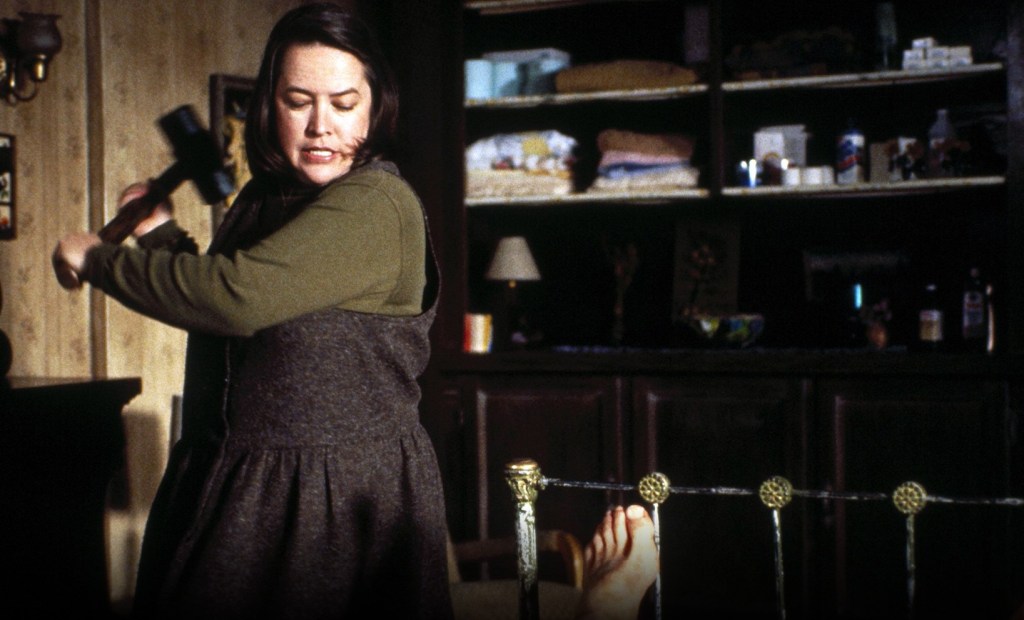
One clip I couldn’t watch until I reviewed the series for this article was the foot-meets-mallet scene from Misery. (Also thank you, Horror Uncle Stephen King, for telling us after the fact that it’s just a prop filled with jelly.)
But somehow…the unpleasantness feels safer through these clips. No context makes these scenes easier to swallow. And it also offers a chance to see if you can not only take, but might enjoy, a film that makes you squirm.
Learning about the messages that are the basis for many horror films was very enlightening. Realizing that there’s a simile about bigotry within the roaches of Creepshow or a warning about advertising to children in Child’s Play? Those revelations blew my mind. That helped me become more informed and appreciative of why horror as a genre thrives in metaphor.
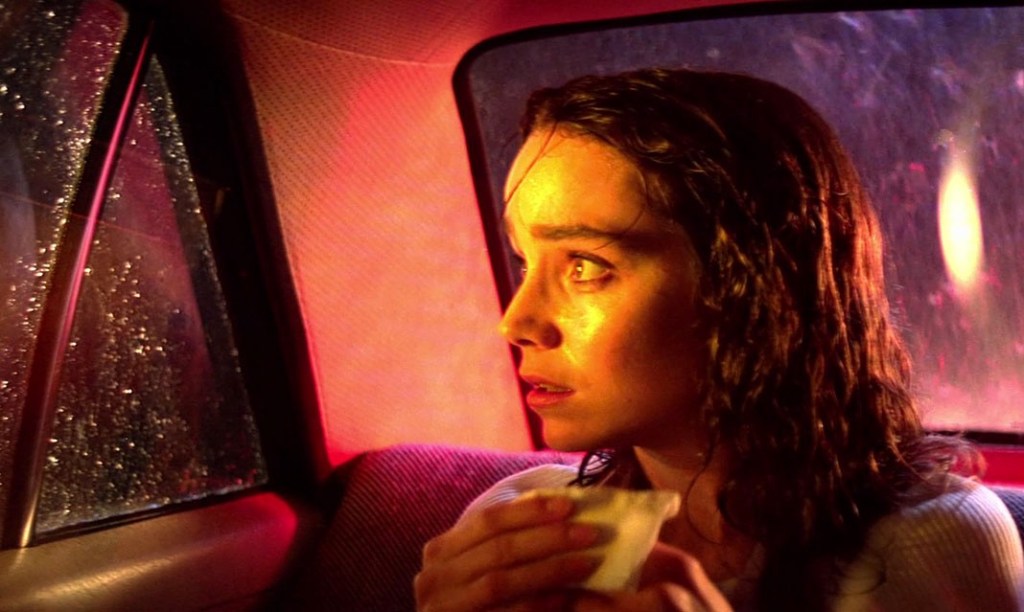
The most important thing Bravo’s 100 Scariest gave me was a broadening of my horizons regarding horror genre. I came to realize the beauty of horror films, the unique poetic visuals of movies like Candyman and Suspiria. I realized the astounding imagination and special effects that were achieved in The Thing. Without this series, I never would’ve picked up the bizarre and beautiful Jacob’s Ladder, a film that profoundly changed what the horror genre meant to me. It’s fair to say that this little blog would not exist without Bravo’s 100 Scariest Movie Moments.
And yeah, there are two other spin offs that help fill in some prominent gaps (30 Even Scarier Movie Moments and 13 Scarier Movie Moments), but they don’t stack up in terms of the insight they provide. …plus the spin-offs are more embracing of the torture-porn trend. Not a fan.
Bravo’s 100 Scariest Movie Moments can be found in full if you know where to search on YouTube. If you don’t feel up to a scary movie marathon this season, but want to take a baby step in that direction, check out the miniseries. Maybe you’ll learn a scary thing or two!
 Why I Love Horror